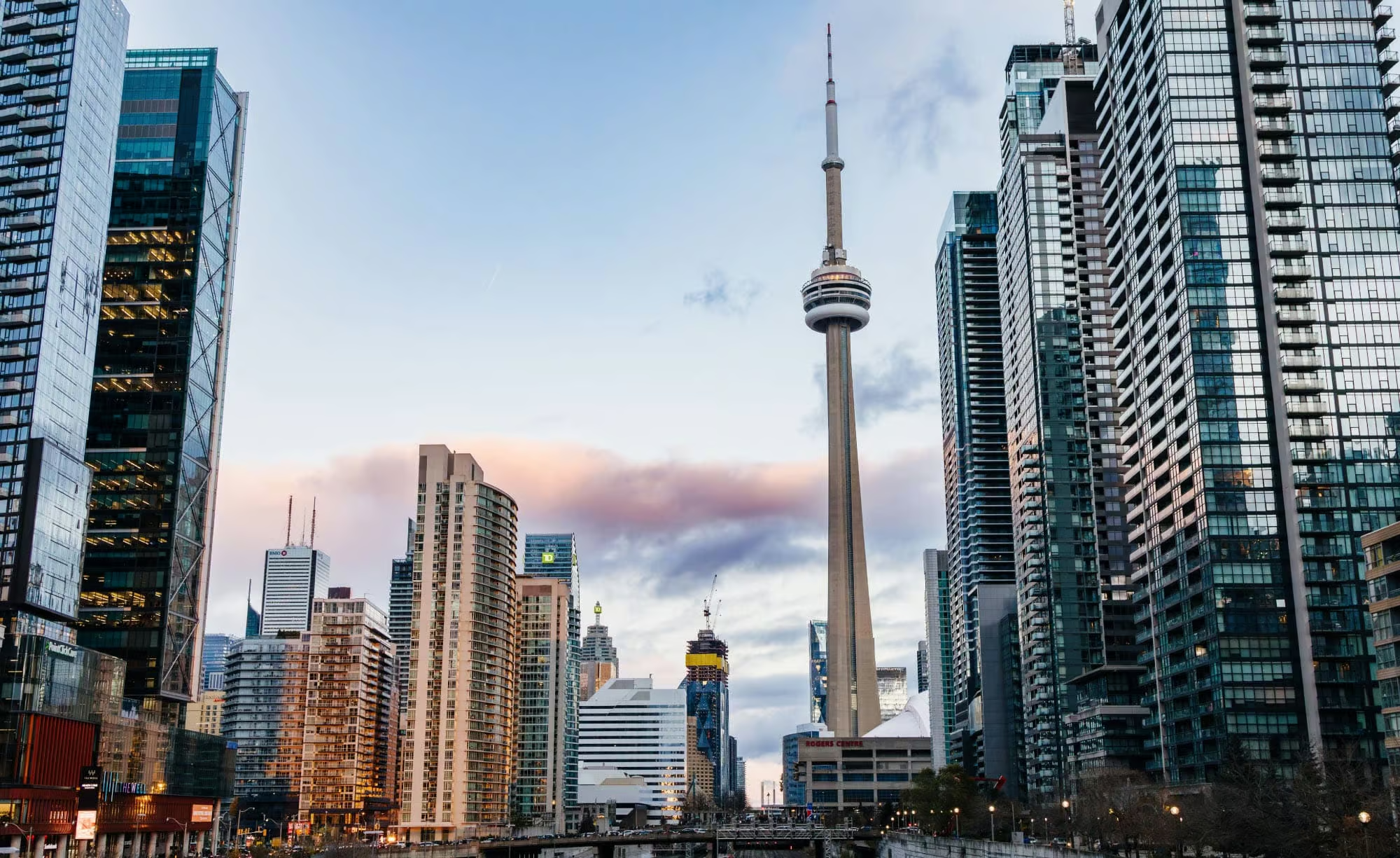



Buying your first home is one of the most exciting milestones someone can achieve. It represents moving up in the world, financial stability, and the start of an exciting journey. For many first-time homebuyers, a condo is the perfect entry onto the property ladder, particularly in larger urban centres like Toronto.
As a Realtor and proud resident of Toronto’s Yonge & Eglinton neighbourhood, I know condos. I specialize in guiding first-time homebuyers, many of whom purchase condos, and I’ve helped countless clients achieve their dream of homeownership through this path.
In my time as a condo dweller and a local real estate broker, I’ve cracked the code on buying a condo. And in this post, I’m sharing everything you need to know about buying your first condo in Toronto.
Let’s dive in!
Jump to Section
- Condo-Buying Basics All Buyers Should Know
- How to Buy a Condo in Toronto
- A Closer Look at the Condo Buying Process
- How to Choose the Right Toronto Condo
- Ready to Buy Your First Condo?
Condo-Buying Basics All Buyers Should Know
So, you’ve chosen to buy a home in Toronto. You’re looking for something that keeps you close to the action. You love the hustle and bustle of city life. Between work, family, and having a social life, you want a home that offers big lifestyle amenities with minimal maintenance. Buying a condo is the obvious answer.
But what exactly does it mean to own a condo? Here’s a quick explanation of condo ownership and some terms you need to know:
What You Own
Legally speaking, your condo unit is your private property, with its boundaries defined in the condo Declaration. However, did you know that you don’t actually own your balcony? That’s why balconies aren’t (or at least shouldn’t be) included in the official square footage of your unit.
Balconies are often categorized as an “exclusive use common element,” which means that no one but you can use it, but it’s not technically part of your owned title.
In addition to the unit and your balcony, there are the common areas of the building. These areas (lobbies, parking garages, elevators, hallways, amenities) are managed by the condo corporation; however, as a unit owner in the building, you have a “proportionate interest” in the building and common areas, and this proportionate interest gives you a say (along with other condo owners) in how the building is managed.
Shared Ownership
As a condo owner, you have a stake in the building and, therefore, have the right to vote on things like major expenditures, amendments to condo bylaws, and more. You are also required to pay condo maintenance fees to pay for the maintenance and repair of the building. More on that later.
When you live in a condo, you will come across terms like “condo corporation”, “condo board”, and “property management”. What’s the difference?
A condo corporation is the legal entity which is created to manage and maintain the common elements and affairs of a condominium property, on behalf of its owners.
The condo board is a group of elected unit owners responsible for making decisions and overseeing the day-to-day management of the condo corporation.
The property management team is a hired company or staff responsible for carrying out the condo board’s decisions and handling the building’s daily operations and maintenance.
Tip: As a condo owner, you have voting rights at the Annual General Meeting (AGM) and other decision-making meetings. However, if you want to be more involved, you can also join the condo board!
Is Condo Living Right For You?
Before buying a condo in Toronto, consider whether condo living is right for you. Yes, you’ll have the benefit of low-maintenance living with added security and built-in amenities. The everyday convenience and prime location are big draws, as well as the fact that condo living is often more affordable than owning a freehold.
However, if you don’t like the idea of shared ownership, monthly condo fees, and having to obey specific rules and regulations, you might want to take a little extra time thinking about your options.
Get more condo basics with these posts and videos next:
- Read: Everything You Need to Know About Condo Ownership
- Watch: An Explanation of Condo Ownership
- Pros and Cons of Buying a Condo in Toronto
How to Buy a Condo in Toronto
The average person only does a handful of real estate transactions in their lifetime. So it stands to reason that the process of getting started buying a property can feel a bit daunting for some. Luckily, we can pretty much break it down into 3 relatively easy steps.
Step 1: Choose Your Agent
A buyer’s agent is your trusted guide and advisor. They are responsible for learning your goals and understanding your situation in order to help you find a home that suits your needs and wants. More than that, they look out for your best interest during the offer process to ensure you are getting the best deal and favourable terms. They handle the lion’s share of the paperwork and walk you through the process, all while answering your questions and making sure you feel confident in your decisions.
Tip: Look for a buyer’s agent with a network. There’s more to your home-buying team than just your Realtor. A great buyer’s agent can also help you find trusted mortgage professionals, lawyers, vendors, and more.
Step 2: Get Pre-Approved
Mortgage pre-approval is essential in today’s market. Not only will a mortgage pre-approval give you an idea of the budget you should work within, but it also helps you plan your monthly payments, and is a powerful negotiating tool as many sellers favour pre-approved buyers.
Step 3: Prepare Your Deposit
Everybody knows that you need a down payment to buy a home. In most cases, your down payment needs to be anywhere between 5-20% depending on the purchase price of your home. However, many buyers are less aware of having to provide a deposit.
Tip: If your down payment is less than 20% of the purchase price, your lender will require you to obtain mortgage default insurance.
A home deposit is the portion of your down payment which is due immediately upon offer acceptance. It’s paid directly to the listing brokerage and is held in their trust account until closing. Here in Toronto, the deposit is usually a minimum of 5% of the purchase price. Since things move quickly and banks can move slowly, it’s a good idea to have your deposit liquidated in an accessible account so you can be ready to act when the moment strikes.
Want to get a closer look at any of these three steps? Here are a few more videos and posts to elaborate:
- Buying a Property: 3 Steps to Get Started
- The Role of Buyer’s Agent
- Why You Need a Real Estate Lawyer When Buying a Home
- The Role of a Mortgage Professional
- Why You Need a Mortgage Approval Before Buying a Home
- Minimum Down Payment Guidelines
- Deposit Vs. Down Payment: What’s the Difference?
- What is Mortgage Default Insurance?
A Closer Look at the Condo-Buying Process
As you can imagine, there are actually a lot of things that need to happen between the three easy steps above and obtaining the keys to your new condo. Let’s take a closer look at some important factors and answers to questions you need to know before you buy:
Costs Associated with Buying a Home
Aside from the purchase price of your home, there are several other costs associated with buying a home that you should budget for, including:
- Land Transfer Tax – A provincial (and municipal, in Toronto) tax that is charged as a percentage of the purchase price. Note: First-time buyers can receive a rebate on land transfer tax.
- Legal fees – Fees paid to your real estate lawyer for services like title searches, registration, and other document preparation.
- Home inspection – Although these are not mandatory, home inspections are strongly recommended to identify any potential issues with the home before you buy.
- Title insurance – A one-time fee that protects you (and your lender!) from any title-related problems that could arise.
- Appraisal fee – Some lenders will cover this fee, but if you’re applying for a mortgage, you may need a home appraisal to confirm its value. Note: An appraisal from the bank is not the same as a pre-approval.
- Status certificate – Typically, this is paid for by the seller, but if you, as a buyer, need to purchase a status certificate, the cost is minimal and well worth it. Amongst other things, the status certificate documents contain information on the building’s financial, legal, and operational health.
Tip: In an effort to lower the barrier to entry for first-time home buyers entering the market, the government has several plans, programs, and rebates to help make buying a home more affordable for first-time buyers in Canada.
Calculate Your Costs Beforehand
Preparation and education are key when buying a home. Get an accurate idea of the potential costs you might encounter with these helpful calculators:
Ready to get started? Book a Buyer’s Meeting right here to learn more about getting the process started.
How Do Offers Work?
So, you’ve toured some homes, attended some open houses, and have found the one you’d like to put an offer on. This is where the real work begins, and the value of your buyer’s agent really shines through.
An offer on a home, once accepted, is a legally binding contract between you and the seller. An offer includes more than just the purchase price of the home. Here are just a few important things that go into an offer:
- Purchase price – What you want to pay for the condo.
- Closing date – When you’d like to take possession.
- Conditions – Specific due diligence done after the offer is accepted (common conditions include home inspection, financing, and status certificate review)
- Inclusions/Exclusions – Specific items the seller will include or exclude from the sale (i.e., appliances, window coverings, light fixtures, etc.)
- Irrevocable Date – When the offer expires.
Tip: Craft a winning offer and improve the chances of your offer getting accepted by doing things like writing a letter to the sellers, offering a competitive purchase price, adhering to the seller’s ideal closing date, sending a firm offer with no conditions, and having your deposit ready to go. Your agent can advise you on the best strategy for a winning offer.
What to Expect at Closing
Once your offer is accepted and your conditions have been satisfied, you’re in the home stretch of your condo-buying journey. While you prepare to move, don’t forget to notify the utility companies of your address change.
And before you get the keys, here are some of the items that take place:
- Closing adjustments – Your lawyer will prepare a statement of adjustments. This is a detailed breakdown that ensures both the buyer and seller pay their fair share of property-related costs. It accounts for items like property taxes, condo fees, or prepaid utilities, showing any credits or reimbursements needed to balance expenses up to the closing date.
- Buyer Visits – Typically, buyers get 2-4 visits to the property during the closing period, whatever amount was agreed upon by both parties in the agreement. These visits are great for taking measurements for furniture, planning paint and decor, bringing in contractors for quotes, and more.
- Final Walkthrough – Your last buyer visit is reserved for a “final walkthrough”. This typically occurs within 48 hours of closing and serves the purpose of checking the condition of the property. During a final walkthrough, you will test appliances, run drains and faucets, and ensure any inclusions/exclusions have been properly dealt with.
Your closing day is your possession date, and while you as the buyer will most likely just be waiting for the call that it’s official, a lot is happening behind the scenes. Check out our video and blog all about closing day for home buyers to get the full breakdown of how that day plays out.
Do you have more questions about any of the specific items covered here? Check out some of our other videos and blogs for an even closer look:
- Smart Questions to Ask When Buying a House
- Understanding Conditions in Real Estate Offers
- How to Craft a Winning Offer
- What Every Home Buyer Should Know About Closing Day
How to Choose the Right Toronto Condo
When buying a condo in Toronto, you have a wide selection of buildings to choose from. Across the city, you’ll find condos of all shapes and sizes. From modern high-rise skyscrapers to industrial-style lofts, charming low-rise buildings, and more, there’s a condo to suit anyone’s needs and wants in the GTA.
When finding the right condo building for you, consider some of these questions:
- How much space do you need? How many bedrooms and bathrooms? Do you need space for a home office?
- Do you need access to parking or public transit, or would you prefer to have everything within walking distance?
- Are you the type of person who likes to be out and about, catching shows, dining out, shopping, and grabbing coffees with friends? Or are you more of a homebody?
- What building amenities matter the most to you? (security, fitness centres, pools, etc.)
Here at yael + co. real estate, we specialize in some of the most exciting condo neighbourhoods in the city: Yonge & Eglinton and The Entertainment District. We’ve profiled the buildings in these neighbourhoods extensively.
Get insights on floor plans, amenities, pet rules, and more in our complete video guides to condos at Yonge & Eglinton and in The Entertainment District.
Ready to Buy Your First Condo?
From start to finish, buying a condo in Toronto is an exciting journey! Whether you’re in the early stages of planning or you’re already pre-approved and ready to start looking, we’d love to help guide you through the process.
With a service-oriented approach and an emphasis on providing educational, hands-on guidance, we’re your ultimate resource for buying your first home in Toronto.
Contact us today by either filling out the form on this page, calling us at 416-909-9235, or emailing us at info@yaelandco.com.